Geopark
UNESCO Global Geoparks
UNESCO Global Geoparks are unique geographical areas with geological sites and landscapes of international significance, managed using an integrated approach to protection, education, and sustainable development. Their goal is to protect, research, and promote geological heritage and to link it with biodiversity, as well as the cultural and intangible heritage of a given area.
Through education and raising awareness of the importance of geoheritage, geoparks strengthen the sense of pride and belonging within local communities. At the same time, they encourage scientific research and cooperation between experts and the local population.
The Geoparks Programme began in 2001 through cooperation between UNESCO and the European Geoparks Network and was officially established in 2015 at the UNESCO General Conference in Paris, when the UNESCO Global Geoparks programme was formally adopted.
Geoparks also contribute to local development, particularly through geotourism, which attracts visitors and encourages the development of various economic activities within the community.
European and Global Network of Geoparks
The European Geoparks Network was founded in 2000 by four pioneering geoparks: Réserve Géologique de Haute-Provence, Vulkaneifel Geopark, Petrified Forest of Lesvos, and Maestrazgo Cultural Park.
The main goals of the network are the preservation and promotion of geological heritage, the protection of geodiversity, and the encouragement of sustainable economic development of geoparks, especially through tourism. Special emphasis is placed on the presentation of natural and cultural heritage and the active involvement of local communities, whose role is crucial for the success and long-term sustainability of geoparks.
Today, the network brings together geoparks across Europe and serves an important platform for cooperation, knowledge exchange, and joint promotion of valuable geological areas.
Currently, the network includes 113 geoparks across 28 European countries.
https://www.europeangeoparks.org/
World Geoparks Network
The first International Conference on Geoparks was held in 2004 in Beijing. In the same year, the European Geoparks Network established formal cooperation with UNESCO, which enabled European geoparks to apply for inclusion in the global network.
By joining the European Geoparks Network, new members automatically become part of the global network, further encouraging international cooperation and knowledge exchange.
According to data from January 2026, the global network of UNESCO Global Geoparks includes 229 geoparks in 50 countries worldwide, making it one of the most important international platforms for the preservation and promotion of geoheritage.
https://www.europeangeoparks.org/
Geology of Medvednica
Medvednica Nature Park is composed of rocks of various stratigraphic ages, ranging from the Paleozoic to the Quaternary, and includes all genetic rock types: igneous, sedimentary, and metamorphic. This diversity indicates a long and complex geological history.
The oldest rocks, dating from the Paleozoic era and forming the core of Medvednica, include clay shales, dark marbles, and light marbled limestones containing fossils such as graptolites and conodonts, confirming that the area was once covered by the sea.
During the Mesozoic era, Medvednica was largely covered by the sea, resulting in the deposition of sandstones and limestones. Igneous rocks such as gabbro and diabase are found in the area of Gornja Bistra, indicating past underwater volcanic activity. Deep-sea limestones and pelagic foraminifera such as Globotruncana are also present. These microfossils can be observed microscopically in the lithographic limestones used in the construction of the walls of Medvedgrad Visitior Centre.
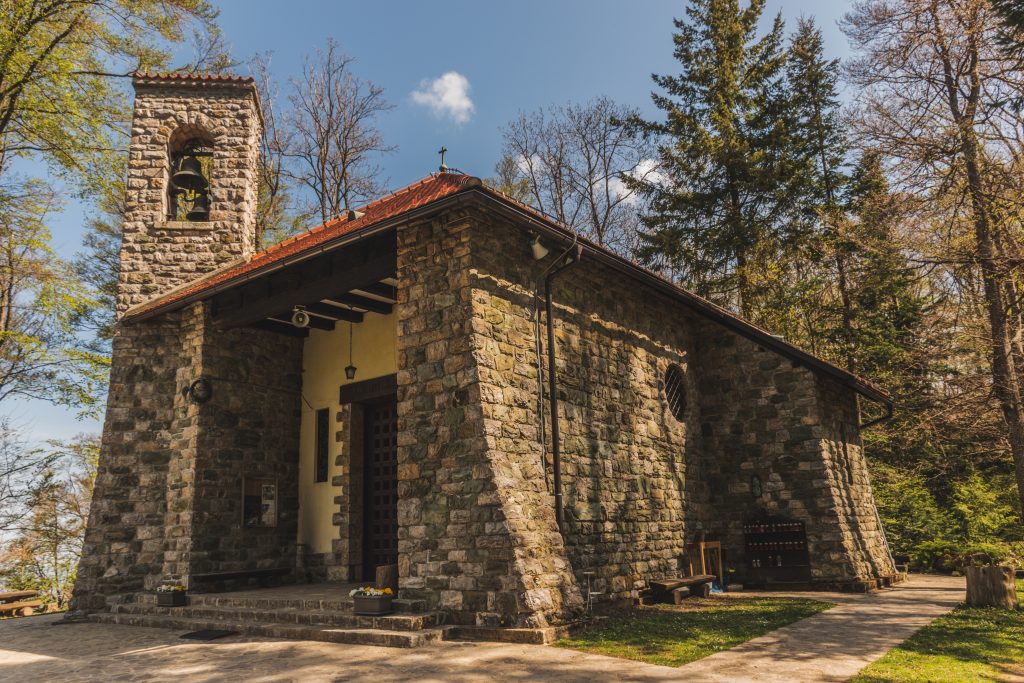
The central part of Medvednica consists of metamorphic rocks, among which green schist is particularly notable. This characteristic rock of Medvednica has been widely used as a building material, for example on the facades of Tomislav’s Home and the Chapel of Our Lady of Sljeme, Queen of Croats.
During the Tertiary period, strong tectonic movements led to the uplift of Medvednica and the formation of the Pannonian Sea, with the mountain partially forming an island. Over time, the sea became less saline and eventually disappeared, followed by the development of lakes and terrestrial environments. The most important rocks from this period are lithothamnian limestones, which are particularly abundant in the areas of Bizek and the Vrapčak stream. These limestones were used in the construction of Zagreb Cathedral and many portals of houses in the Upper Town.
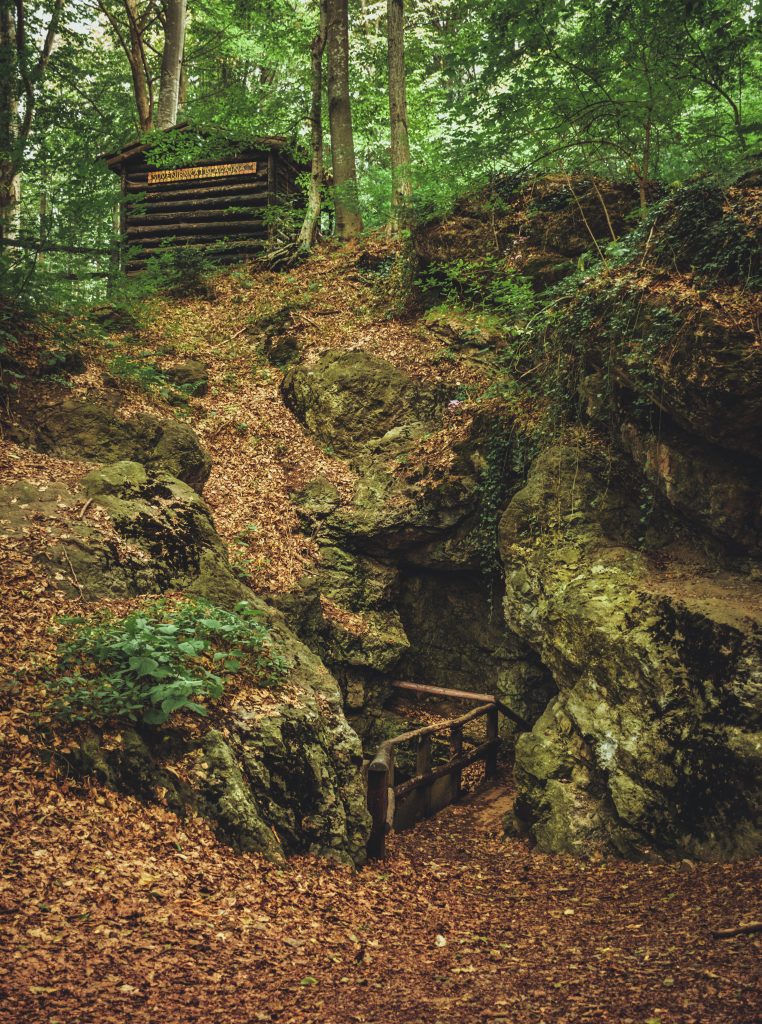
Lithothamnian limestones and Triassic dolomites form a carbonate zone in the western part of the Medvednica, creating an isolated karst area within the surrounding non-karst terrain. Numerous karst features are present, including caves and sinkholes. The Veternica Cave, a protected geomorphological monument of nature, is located in this area and developed along contacts between dolomite and limestone.
In the Quaternary period, glaciations and other geological processes shaped the present-day relief and the Sava Valley. The area remains tectonically active, as evidenced by earthquakes. The strongest recorded earthquake occurred on 9 November 1880, with an estimated magnitude of 6.1–6.3 on the Richter scale, near Kašina. A more recent earthquake in 2020 had a magnitude of 5.5 and also caused significant material damage, with its epicentre in the Markuševac area.
Geological Columns and Educational Trails
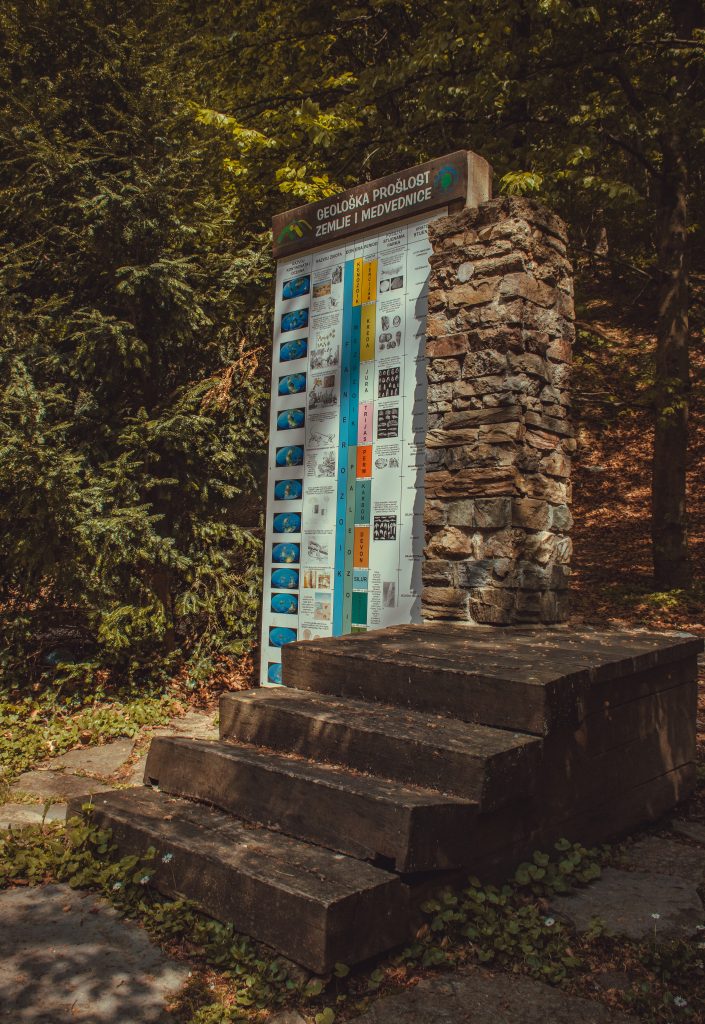
The geological structure and history of Medvednica can be explored through geological columns located at the main entrances to the Park (Bliznec and Bistra), where rocks are arranged chronologically from the oldest to the youngest.
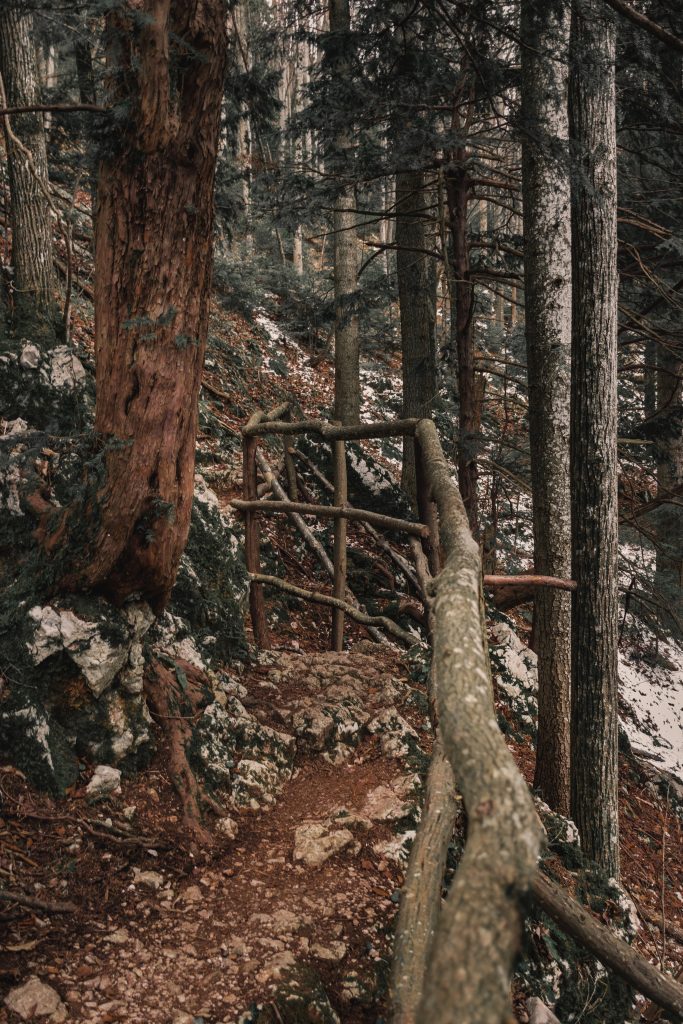
The Miroslavec Educational Trail (from Šestinski Lagvić to Kraljičin zdenac) is also dedicated to geology, along with numerous information boards installed throughout the Park.
The Process of the inclusion Medvednica Nature Park to the UNESCO Global Geoparks Network
The application process, in accordance with UNESCO guidelines, typically lasts three years and consists of several key phases.
The first year is dedicated to the preparation of the application. A comprehensive application dossier is prepared, and all necessary documentation is collected. The boundaries of the future geopark are defined, and active cooperation is established with the local community, local and regional authorities, professional institutions, and relevant ministries. During this period, letters of support are gathered and cooperation agreements are concluded with key partners.
At the same time, promotional materials are developed, including a bilingual website, a promotional video, brochures, and other content. At the end of the first year, all documentation is submitted to UNESCO in English.
The second year begins with the visit of UNESCO evaluators. They assess the geopark area, meet with local stakeholders, and evaluate the quality of the application. During this period, sites of geological, natural, and cultural importance are further developed and marked, geological trails are enhanced, and educational activities are organised for travel agencies, accommodation providers, family farms, and other future partners.
The third year represents the nomination phase, during which the intensive implementation of planned activities continues. Special emphasis is placed on improving and updating the existing Management Plan of Medvednica Nature Park and related protected areas, incorporating content and data relevant to the geopark.
Activities of Public Institution Medvednica Nature Park by Year
2023
A meeting was held with experts from the Croatian Geological Survey, during which it was proposed that Medvednica Nature Park could be included in the UNESCO Global Geoparks network due to its exceptional geological diversity and international significance.
2024
The 115th anniversary of the Croatian Geological Survey was held at the Medvedgrad Visitor Centre. On this occasion, a new geological map of Medvednica was presented, and a Cooperation Agreement was signed with the aim of promoting geology. Geological heritage was further presented to the public through the “Razgovor sa stijenama” series and the celebration of the International Geodiversity Day on 6 October.
2025
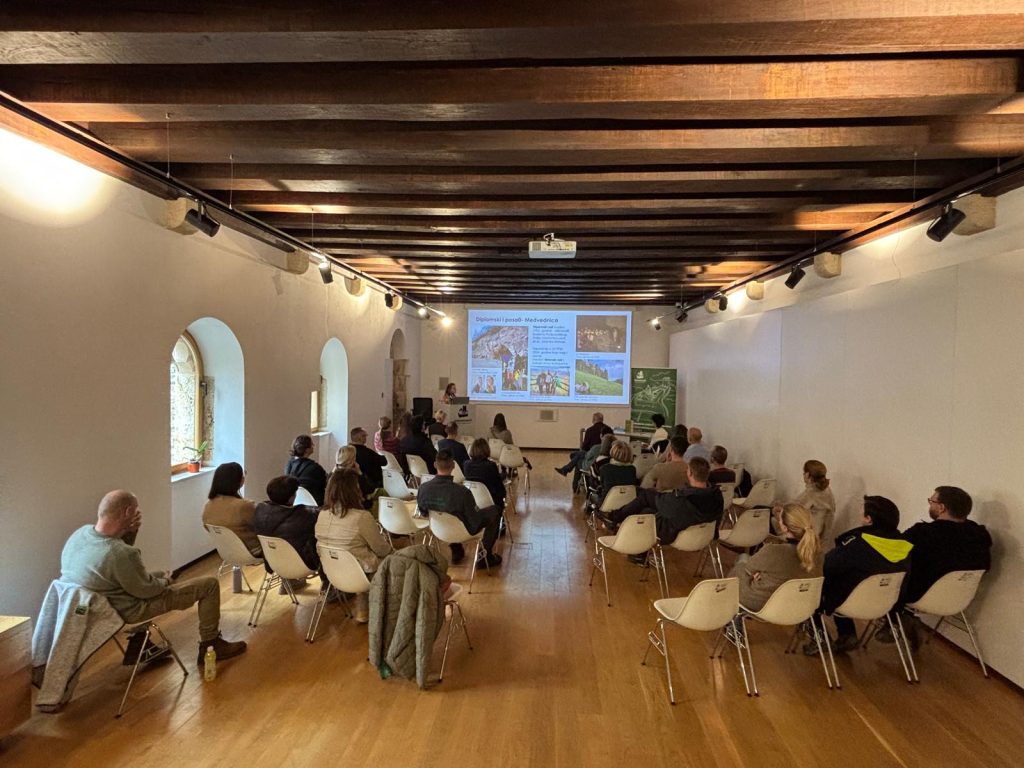
A report on the geological value of the Park was produced for the Croatian television programme “Eko zona”, and the Park participated in the 1st Festival of Croatian UNESCO Geoparks. In cooperation with the Croatian Geological Society, the GEA 2025 photo exhibition was held at Medvedgrad on the occasion of International Geodiversity Day. In December, an expert panel on the protection and promotion of geoheritage was organized.
The Park fulfils the criteria for candidacy for UNESCO Global Geopark status, confirming its strong potential to obtain this designation, which would contribute to the preservation of geoheritage and the development of sustainable tourism. The Park is also a member of the EUROPARC Federation and a three-time recipient of the European Charter for Sustainable Tourism for the period 2024–2028.
2026
At the beginning of 2026, the candidacy was presented to the National Commission for UNESCO Global Geoparks, which issued a positive opinion and supported the inclusion of Medvednica Nature Park in the UNESCO Global Geoparks network.